Monster Hunter Wilds beginner's guide: how hunts and progress work
New to Monster Hunter Wilds? How the hunt-craft loop works, what to do before and during a quest, and the systems the game explains least, from Capcom's own manual.
The short answer
You get stronger through gear, not levels: hunt monsters, carve or capture them for materials, and turn those into better weapons and armor at the Smithy. Before a quest, eat a meal; at the start, claim the supply items from your Seikret. Ride your Seikret to the target, use Focus Mode to hit wounds, and call for help with an SOS flare if a hunt is too hard.
- How you get stronger
- Better weapons and armor from monster materials
- Weapon types
- 14
- Quest failure
- Reward money hits 0 from fainting, or time runs out
- Practice
- Training Area at the Windward Plains Base Camp
- Stuck?
- Follow the Objective Guidance and scoutflies
- Help on hard hunts
- SOS flare (players or NPC Support Hunters)
- Save slots
- Up to 3 characters per user account
How does progress work?
Capcom’s manual describes the game as a loop:
- Hunt monsters on quests and while exploring.
- Collect materials by carving, capturing and gathering.
- Use the materials and zenny (money) at the Smithy to make and upgrade weapons and armor.
- Use that gear to take on tougher monsters, which give better materials.
Your Hunter Rank rises as you play. It unlocks harder quests and decides which monsters you can start Field Surveys on. When the manual lists ways to make your hunter stronger, though, it names gear and practice: improve your weapon and armor, equip decorations, make Artian equipment and train with your weapon.
The story is split into missions. Main missions push the story on, and their required quests are called assignments. Side missions are optional but give more Hunter Rank Points and can unlock new facilities.
What should you do before a quest?
- Check the objective. Hunt means slay or capture, Slay means only slaying, Capture means only capturing, and Repel means driving the monster off. Doing the wrong one fails a Slay or Capture quest.
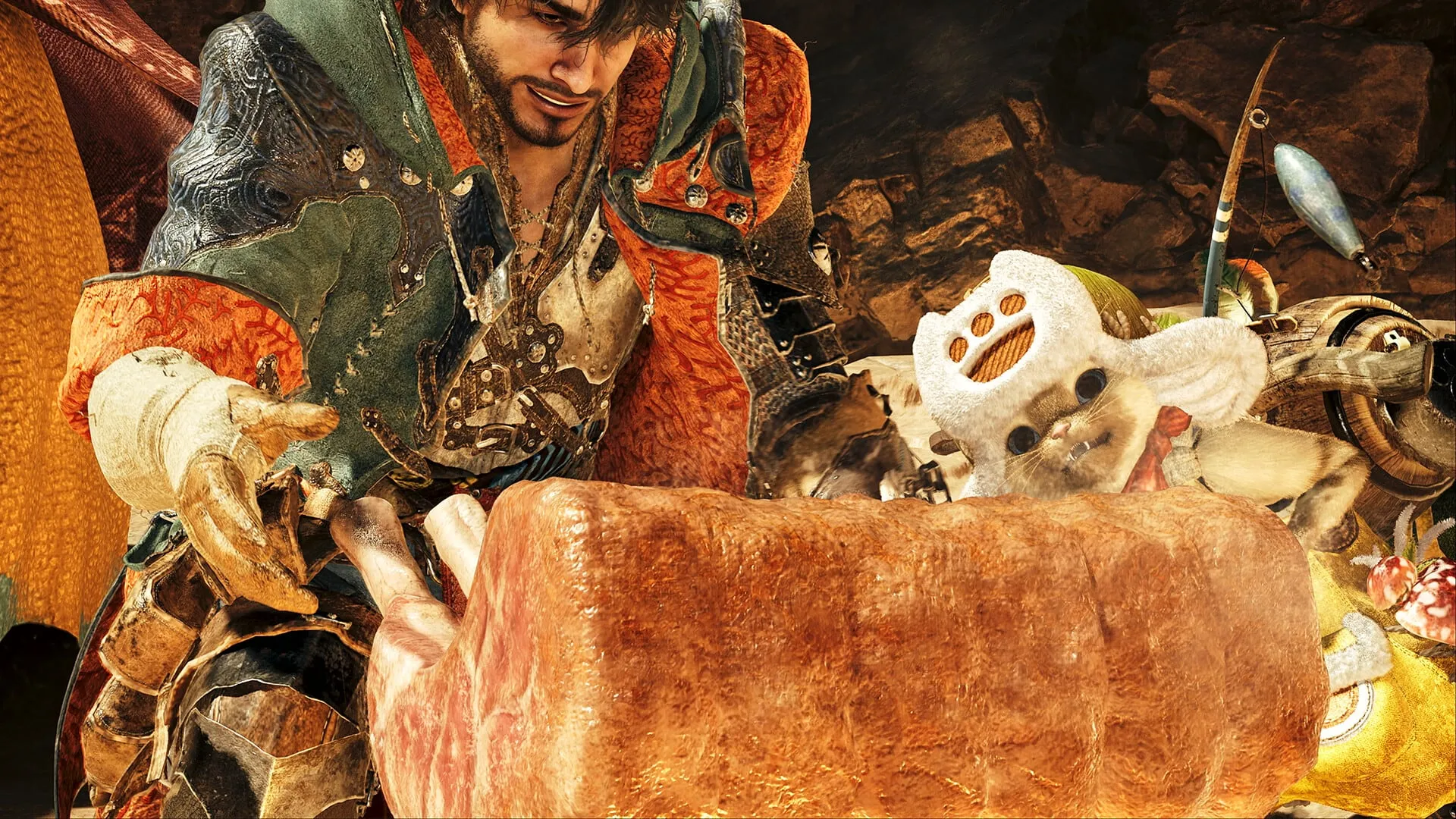
- Eat a meal. Grill one in your tent or with the portable BBQ grill on your Item Bar. Meals give temporary boosts such as more health and stamina. Meals you get invited to in settlements are stronger and last longer.
- Restock. Buy items at the Provisions Stockpile and craft more from gathered materials.
- Practice. The Training Area behind the Windward Plains Base Camp has a target dummy, and items and ammo used there are not consumed. You can fast travel to it.
What happens on a hunt?
- Claim your supply items. At the start of a quest, your handler puts supplies in the Seikret Pouch (left on the D-pad on Switch 2). Unused supplies go back to the Guild after the quest.
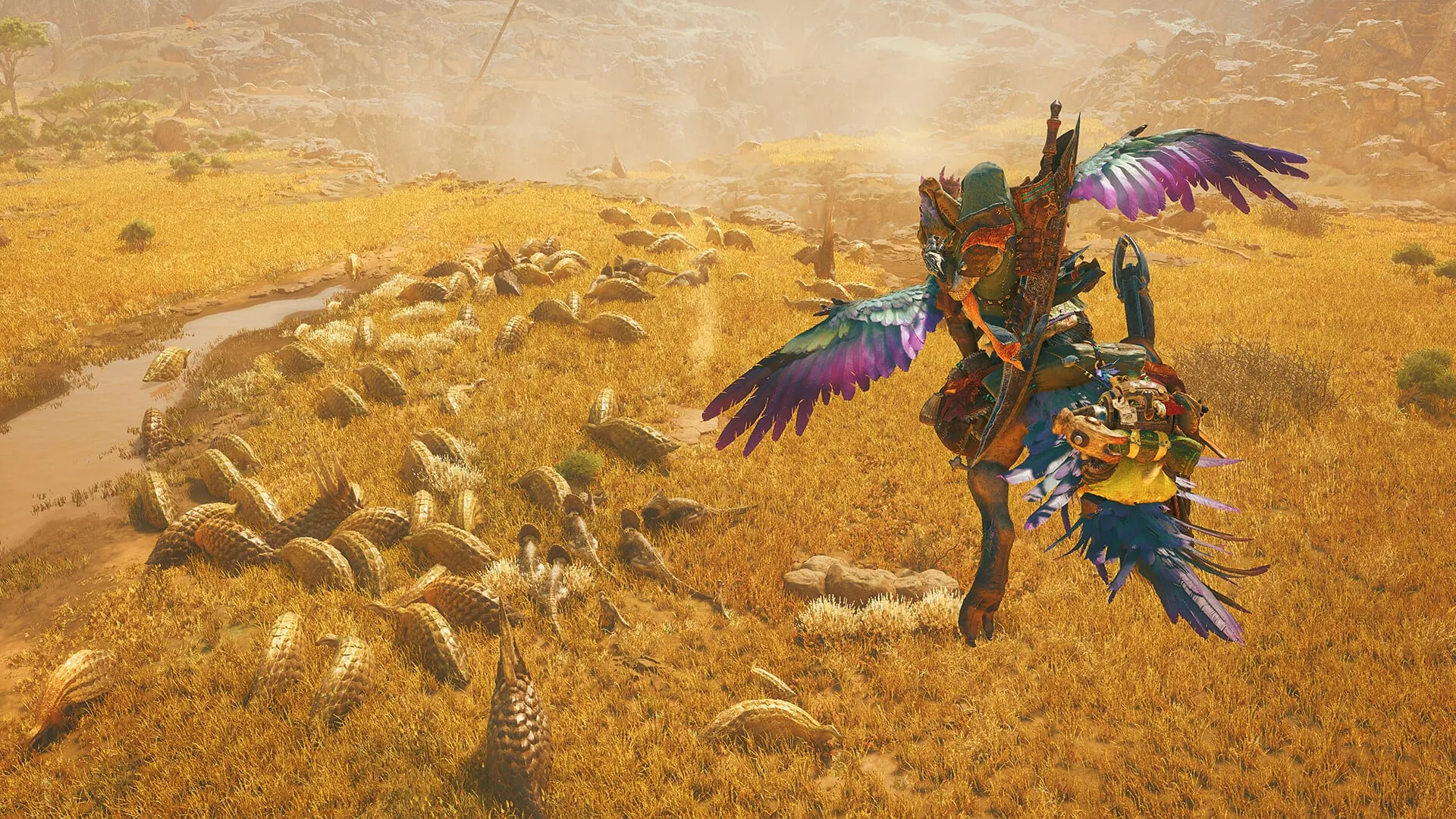
- Ride to the target. Mount your Seikret and it runs to the quest target on its own. Scoutflies show the route.
- Find weak spots. Hold Focus Mode to see wounds and weak points in red. A Focus Strike on a wound deals heavy damage and destroys it.
- Use the area. Drop boulders with the Hook Slinger, shoot stones at explosive plants, and use Slinger ammo such as burst pods to stagger monsters.
- Finish and collect. Carve a slain monster, or trap and tranquilize a weakened one to capture it.
Each faint sends you to the nearest camp and lowers the quest’s reward money. When it reaches zero, or the time limit runs out, the quest fails and you get nothing.
The full button layout is in Switch 2 controls and settings.
What is the difference between quests and expeditions?
An expedition is going out without a quest. You can hunt and gather with no time limit and no fainting penalty, but you get no quest rewards.
A Field Survey turns an expedition into a quest on the spot. Attack a large monster enough, or pick it on the map, and the hunt becomes a quest with rewards. During the story, Field Surveys are only available between some missions.
Optional quests can be repeated as often as you like. A completed assignment cannot be replayed, but an optional quest for the same monster usually opens up.
What if a hunt is too hard?
- Fire an SOS flare from Start Menu > Missions & Quests > SOS Flare. Other players can join, and if nobody does, NPC Support Hunters can fill in. See the multiplayer guide.
- Improve your gear. Upgrade your weapon and armor or add decorations. Armor with the right resistances also helps against status ailments.
- Learn the monster. The Monster Field Guide (Start Menu > Info > Monster Field Guide) collects hunting information on each one.
- Let your Palico help. It heals, sets traps and buffs you; see Palico and Seikret.
Which weapon should you start with?
The free Prologue Demo, which covers the opening of the game, already lets you use all 14 weapon types. You can carry two weapons into a hunt and swap between them with the help of your Seikret. The in-game Play Guide (Start Menu > Info > Play Guide) has the controls for each. Try them in the Prologue Demo before you buy, and your progress carries over.
What else is worth knowing early?
- Saves: each user account holds up to three characters. The game autosaves, and you cannot turn that off.
- Lost? Follow the Objective Guidance on screen and the scoutflies.
- Camps: set up Pop-up Camps in the field with a Camping Kit (it costs Guild Points). You can fast travel to any camp from the map, and your tent restores health and sharpness.
- Login bonuses: starting the game online gives daily items and a Lucky Voucher, which raises quest rewards. You can hold up to five.
- Accessibility: the Options menu has color blindness help, an arachnophobia option, motion sickness settings and HUD size presets.
The game’s full length is covered in how long Monster Hunter Wilds is.
Newsletter
Get new guides by email
One short email when new walkthroughs and guides go up. No spam, and you can unsubscribe from any email.
You'll get an email to confirm. Sign-ups are handled by Kit; see our privacy page.
Quick questions
Does Monster Hunter Wilds have character levels?
Your hunter has a Hunter Rank, which rises as you play and unlocks harder quests and monsters. To get stronger, Capcom's manual points to gear and practice: better weapons and armor, decorations and Artian equipment.
What happens if I faint?
You are taken back to the nearest camp and the quest's reward money drops. If it drops to zero, the quest fails. How many faints a quest allows varies.
What is the difference between an expedition and a quest?
An expedition is exploring with no quest: no time limit and no fainting penalty, but no quest rewards. A quest has a target, a time limit and rewards.
Should I slay or capture monsters?
Either completes a hunting quest. Slain monsters can be carved for materials; captured ones cannot be carved but give extra capture rewards.
Where do I learn my weapon?
The in-game Play Guide (Start Menu > Info > Play Guide) explains each weapon's controls, and the Training Area lets you practice without using up items.
Can I turn off autosave?
No. The game saves automatically, and you can also save by hand from Start Menu > System > Save.
Sources
- Recommended Reading: Welcome to Monster Hunter Wilds (Nintendo Switch 2)Capcom official online manual
- Advancing Through the Game: Hunting Monsters in the Story (Nintendo Switch 2)Capcom official online manual
- Tips: Quest Tips (Nintendo Switch 2)Capcom official online manual
- Tips: General Tips (Nintendo Switch 2)Capcom official online manual
- Getting Started: The Title Menu (Nintendo Switch 2)Capcom official online manual
- Advancing Through the Game: Support Hunters (Nintendo Switch 2)Capcom official online manual
More Monster Hunter Wilds guides
- How long is Monster Hunter Wilds? Story and completion timesMonster Hunter Wilds' story takes about 20 to 30 hours, by press estimates. Completing everything takes 60 hours or more. What those numbers include, and what they leave out.
- Monster Hunter Wilds meals: how food buffs and Food Skills workHow meals work in Monster Hunter Wilds: grilling at the BBQ, rations and ingredients, Food Skills, meal invitations, the Grand Hub Canteen, and which meals the press suggests.
- Monster Hunter Wilds regions and seasons: Fallow, Inclemency, PlentyThe regions of Monster Hunter Wilds, their apex predators and villages, and how the Fallow, Inclemency and Plenty seasons change each one.
- Best Monster Hunter Wilds weapon for beginners, by the pressWhich Monster Hunter Wilds weapon to start with: what PC Gamer, GamesRadar+ and Kotaku recommend, why the Long Sword keeps coming up, and how to test weapons for free.